
To maintain a competitive edge, leading manufacturers are moving away from traditional T-slot bolting in favor of Quick Change Systems. This article explores how these systems transform production efficiency and why they serve as the foundation for a modern, high-throughput machine shop.
1. What is a Quick Change System?
A Quick Change System (often referred to as a Zero-Point Clamping System) is a modular workholding interface that allows fixtures, vises, or workpieces to be swapped in and out of a machine with extreme speed and micron-level repeatability. Instead of manually indicating a vise every time it’s mounted, the system uses standardized pull-studs and receivers to "lock" the setup into a predetermined zero-point instantly.
2. Why Manufacturers are Making the Switch
Drastic Setup Reduction (From Hours to Minutes)
Traditional setups often require 30 to 60 minutes for alignment and securing. With a quick-change interface, a setup changeover can be completed in under 2 minutes. This allows for significantly more "spindle-on" time per shift, directly increasing your shop's total daily capacity.
High Repeatability and Precision
Human error during setup is a leading cause of scrapped parts. Systems engineered by HER-BERT offer repeatability within 0.005mm (5 microns). This precision allows you to remove a fixture mid-job and return it later with total confidence, eliminating the need to re-indicate or pick up new offsets.
External Setup Strategy
Quick change systems empower operators to mount the next workpiece onto a pallet outside the machine while the spindle is still cutting the current job. This "Off-Machine Setup" strategy effectively eliminates idle time between batches, transforming your CNC into a continuous production engine.
3. Exploring HER-BERT Quick Change Solutions
To meet varying production volumes and budget requirements, HER-BERT offers a comprehensive range of systems designed for real-world machining environments:
- Zero Point Clamping System: The gold standard for high-volume or automated production. Utilizing pneumatic or hydraulic force, these systems provide rapid, effortless clamping with maximum rigidity—perfect for 5-axis work and robotic cells.
- Manual Quick Lock Systems: The ideal entry point for job shops. These systems provide the same 5-micron repeatability as automated versions but are operated manually, offering a massive boost in productivity with a much lower initial investment.
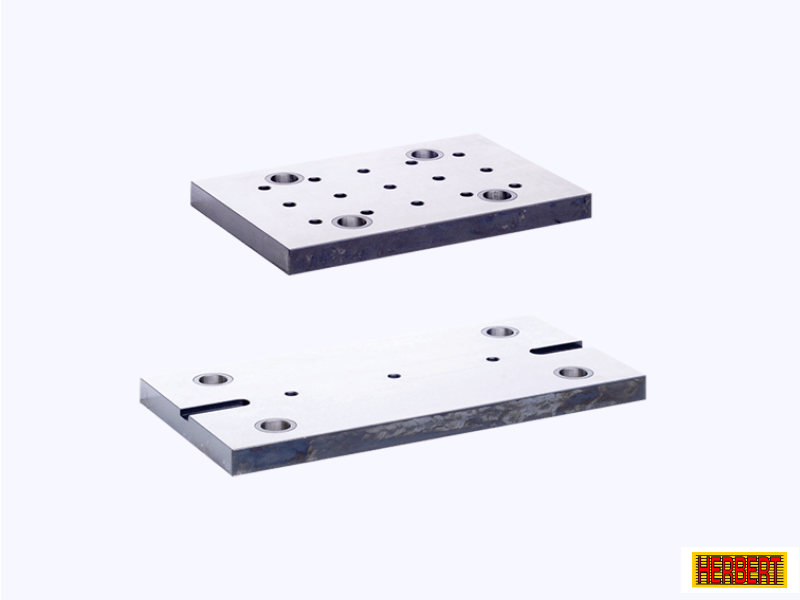
- Modular Quick Change Plates: Designed to standardize workholding across multiple different CNC machines in your facility, allowing seamless movement of jobs between different machining stations.
4. ROI: The Business Case for Quick Change
While the initial investment in a Quick Change System is higher than traditional clamps, the payback period is remarkably short. Consider the impact on your bottom line:
"If a machine shop saves just 45 minutes of setup time per day on a machine with a $100/hour shop rate, the system pays for itself in just a few months through increased spindle availability alone."
5. Key Considerations for Implementation
When selecting a system for your facility, focus on these three critical factors:
- Rigidity: Ensure the clamping force can handle your heaviest milling parameters without vibration.
- Chip Protection: HER-BERT systems are engineered with specialized protection to prevent metal chips from interfering with the locking mechanism, ensuring reliable operation in harsh environments.
- Scalability: Choose a system that can grow with you—from a single 3-axis mill to a 5-axis center or an automated robotic cell.
Conclusion: Standardize to Maximize
Quick Change Systems are no longer a luxury—they are a necessity for manufacturers aiming for High-Mix, Low-Volume (HMLV) efficiency. By standardizing your workholding interface, you reduce reliance on highly skilled setup labor and ensure your spindles stay turning longer.
Optimize your production today. Explore the full range of HER-BERT Quick Change and Zero-Point solutions and find the perfect fit for your CNC environment.