
What’s New
How to Choose the Right Vise for Your Lathe Machine
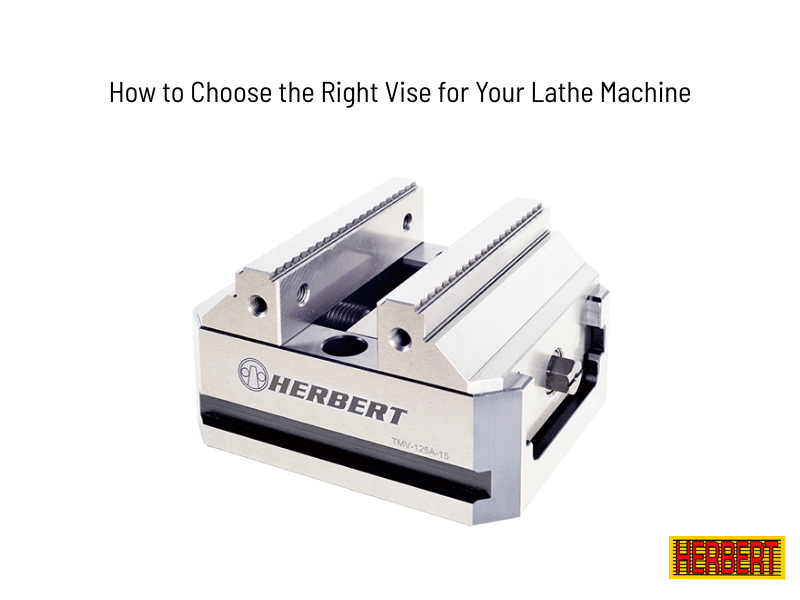
In the world of precision machining, the lathe machine remains a cornerstone for producing round parts, threads, and complex rotational components. While the lathe's spindle and cutting tools often get the spotlight, the importance of the workholding device—the vise—cannot be overstated. The right vise ensures the workpiece is held securely, accurately, and safely during the turning process. Choosing the wrong one could result in machining errors, surface damage, or even safety hazards.
This guide walks you through the key considerations when choosing a vise for your lathe machine, with practical insights for manufacturers who demand both efficiency and precision.
1. Understand the Nature of Your Workpieces
Before you can choose the right vise, you must first understand what you will be clamping:
- Round or cylindrical parts: These are the bread and butter of lathe machining. They require a vise that can grip securely without distorting the surface.
- Irregularly shaped workpieces: Some components have uneven surfaces or asymmetrical profiles, which makes traditional flat jaws unsuitable. A vise with adaptable or self-centering jaws can make a huge difference.
- Thin-walled components: These require careful clamping to avoid deformation, which could compromise precision.
2. Why Vise Selection Matters for Lathes
Unlike milling, where the workpiece is stationary, lathe machining involves continuous rotation at varying speeds. This creates unique challenges:
- High rotational forces: Any slippage can result in poor tolerances or damaged tools.
- Precision alignment: Even a slight misalignment can affect the roundness and concentricity of the final part.
- Surface finish quality: Excessive vibration due to poor clamping leads to rough surfaces and rework.
A well-selected vise improves accuracy, reduces vibration, and ensures the cutting tool can work efficiently.
3. Recommended Vises for Lathe Machines
Two vise types stand out for lathe applications:
V-Jaw Machine Vise
Designed specifically for holding cylindrical or round components, the V-shaped groove in the jaws offers stable, multi-point contact, reducing the risk of slipping. This design also distributes clamping pressure evenly, minimizing surface marks. It’s ideal for shafts, rods, and pipe-like workpieces.
Self-Centering Vise
Perfect for operations that require symmetrical clamping, this type automatically positions the workpiece in the center every time. It’s especially useful when switching between different diameters quickly, making it a favorite for high-mix, low-volume production. Self-centering vices are also a go-to choice for precision turning, where concentricity is critical.
4. Key Technical Considerations
When selecting a vise for your lathe machine, consider these technical specifications:
- Clamping force: Sufficient to hold the workpiece securely without distortion.
- Jaw material and hardness: Hardened steel or specialized alloys for long-lasting precision.
- Opening capacity: Must accommodate your largest workpieces.
- Swivel base options: Allow for easy adjustment of angles during setup.
- Quick-change jaw systems: Reduce downtime when switching between different parts.
5. Maintenance for Longevity and Performance
A high-quality vise can last for many years if maintained properly:
- Regular cleaning: Remove chips and debris after each job to prevent wear on sliding surfaces.
- Lubrication: Keep moving parts well-oiled to ensure smooth operation.
- Inspection: Periodically check jaw alignment and replace worn components to maintain accuracy.
6. Real-World Applications
For example, a manufacturer producing automotive drive shafts may use a V-Jaw Machine Vise to ensure secure clamping of long cylindrical parts, while a precision medical device company might rely on a Self-Centering Vise for machining titanium bone screws where concentricity is non-negotiable. Both scenarios show how the right vise directly impacts quality and efficiency.
Conclusion
Choosing the right vise for your lathe machine is more than just matching dimensions—it’s about ensuring precision, repeatability, and safety for every part you produce. At Herbert Enterprise Co., Ltd., we specialize in manufacturing high-quality vices, including V-Jaw Machine Vises and Self-Centering Vises, designed to meet the demands of modern lathe machining. With the right clamping solution, you can improve part quality, reduce setup time, and extend tool life, ultimately boosting your overall productivity.